
One celebration, a lifetime together
Why wedding budget conversations arise—and how families can find common ground
A practical, respectful way for two families to discuss wedding scale, shared expenses, guest lists and priorities without letting one event overshadow a compatible partnership.
Reviewed by the Famintro Team ·
 Famintro perspective
The short answer
Direct answer
A wedding is often one of the largest social events a family hosts, so questions about scale and budget can arise early in alliance conversations—and may catch either family off guard. Preferences vary widely: some families are flexible, some have a range in mind, and others have firm expectations about the event or how agreed costs may be shared. Famintro recommends discussing this calmly and transparently, without pressure, status comparison or demands. If the couple is compatible, families should try to find fair common ground: the celebration lasts a day, while the partnership is intended for life.
Inside Famintro
See the feature in the actual app
Why the budget question appears early
A marriage celebration may bring together relatives, friends and community members on a scale a family rarely hosts otherwise. Venue, food, travel, accommodation, clothing, ceremony arrangements, photography and many smaller items can create substantial expense. Asking about the likely format is therefore not automatically inappropriate; the tone, timing and purpose of the question matter.
The question can still feel abrupt when families have only begun to understand each other. A helpful response is to avoid quoting a number under pressure. First clarify what kind of ceremony each family imagines, who needs to be included and which decisions should wait until the couple is comfortable moving forward.
Families can have very different expectations
In Famintro's conversations with families, we encounter a broad range: some are highly flexible about spending; some prefer a modest, mid-sized or larger event; some want an early understanding of how mutually agreed event costs might be handled; and some regard a minimum scale as essential.
Differences are easier to address when stated respectfully and early enough. No family should disguise a firm expectation as a casual suggestion, and no alliance should be conditioned on pressured payments, costly gifts or one side proving its status. Voluntary gifts and personal purchases should remain voluntary—not hidden obligations.
Find common ground when the couple is compatible
When two people share values, communicate well and genuinely want to build a life together, families can explore alternatives before allowing event scale to end a promising alliance. A smaller guest list, fewer functions, a different venue, daytime timing, shared priorities or a simpler format can preserve what matters without creating avoidable strain.
Fair does not always mean splitting every bill equally. It means that responsibilities are discussed openly, agreed without coercion and kept within what both sides can comfortably afford. The wedding is one day; the couple's financial and emotional wellbeing continues long after it.
Keep the vivaah sanskar at the centre
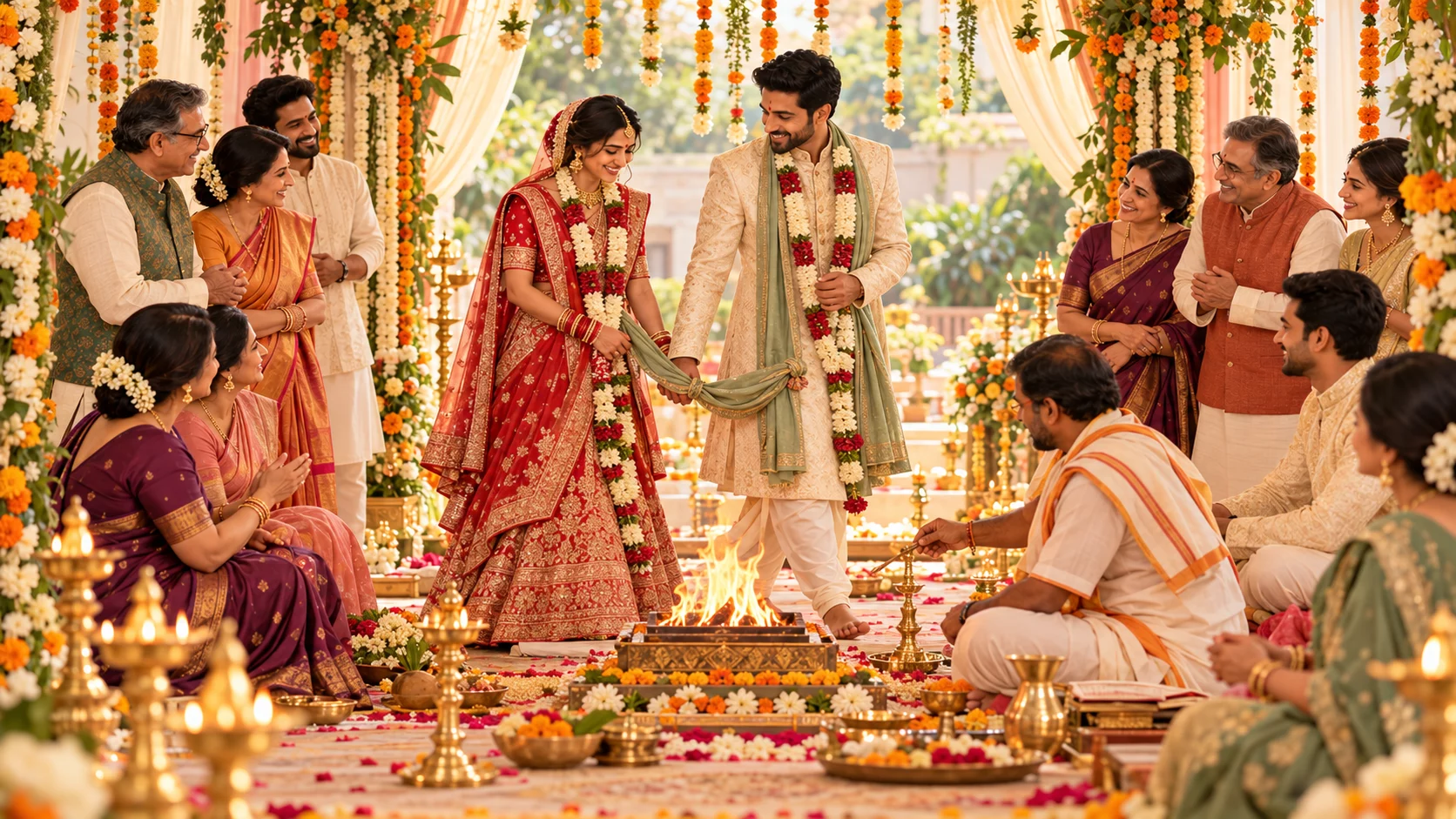
For Hindu families who choose a traditional ceremony, vivaah is a sanskar: vows are made before the sacred fire while a pandit recites mantras, divine blessings are invoked and the couple receives the blessings of elders and relatives from both families. The dharmic meaning need not depend on the size of the banquet or the price of its decoration.
A simple ceremony can be deeply meaningful, and a larger celebration can also be joyful when it is freely chosen and affordable. The guiding question is whether the arrangements support the ceremony and the people—not whether spending has become the ceremony.
Plan enough to avoid surprises, but do not splurge
A high-level ceiling helps prevent many small decisions from silently becoming an unaffordable total. Families can begin with a tentative date, approximate overall amount and estimated guest list, then outline categories such as venue, food, ceremony arrangements, travel, accommodation, clothing, photography, jewellery or personal purchases, and voluntary gifts.
Build a contingency rather than spending the full ceiling on paper, and revisit estimates as plans become clearer. Avoid borrowing or exhausting long-term savings merely to meet a social comparison. Exact financial decisions should be made privately by the people responsible for them.
How Famintro supports an early plan
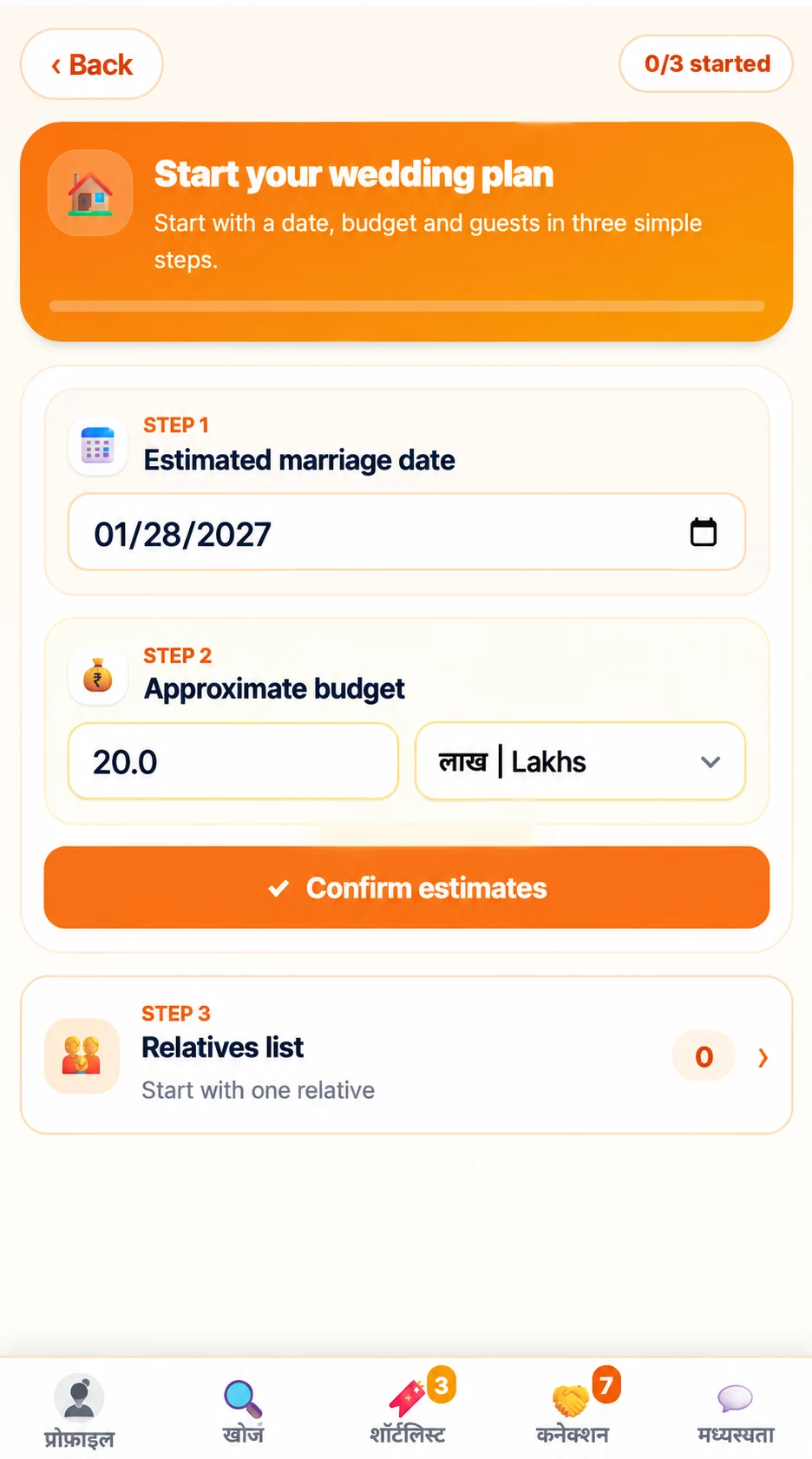
Famintro lets a family start with three simple planning inputs: an estimated marriage date, an approximate budget and a relatives list. The aim is to turn a vague idea into a working outline that authorized family members can refine together.
Families can then use guidance for broad expense categories and build a tentative guest list. These tools do not decide what anyone should spend and do not communicate a demand to another family. They help a family prepare its own realistic view before a respectful joint conversation.
Common questions
Frequently asked questions
When should two families discuss the wedding budget?
After there is genuine mutual interest, but before either family makes bookings or assumptions. Begin with the preferred scale and priorities rather than demanding an immediate number.
Should wedding costs always be divided equally?
Not necessarily. Any arrangement should be transparent, voluntary, affordable and mutually agreed, without pressure or status comparison.
What should an initial wedding estimate include?
Start with the tentative date, guest count and overall ceiling, then consider venue, food, ceremony arrangements, travel, accommodation, clothing, photography and other personally relevant categories.
Does Famintro share a family's planning budget with matching families?
The wedding planner is described as a tool for authorized family members to prepare their own outline; it should not be treated as a public demand or promise.
What if the families prefer very different event scales?
Clarify what is essential, what is flexible and what each side can comfortably afford. If the couple is compatible, explore a smaller guest list, fewer functions or a simpler venue before letting a one-day event end the alliance.